Rigorous quantum computing education, built for practical progress.
Learn quantum computing through structured courses, hands-on coding, graded assignments, instructor feedback and verified certificates—all in one focused platform.
Start with free access. Upgrade when you need full courses, assignments, feedback and certificates.
Continue your quantum journey
IBM Quantum Computer Programming
Quantum Algorithms / Quantum Approximate Optimization Algorithm
from qiskit_ibm_runtime import QiskitRuntimeServicefrom qiskit.transpiler.preset_passmanagers import generate_preset_pass_manager# Prepare the QAOA circuit for IBM quantum hardwareservice = QiskitRuntimeService()pass_manager = generate_preset_pass_manager(backend=backend, optimization_level=3)isa_circuit = pass_manager.run(qaoa_circuit)IBM Quantum Computer Programming with Hands-On Coding
A structured asynchronous course that moves from quantum foundations to practical algorithm implementation using Python, Qiskit and IBM quantum systems.
About this course
This course offers a comprehensive introduction to quantum computing, beginning with the fundamentals and progressing to advanced algorithm design and implementation. No prior knowledge of quantum computing or quantum physics is required, although familiarity with matrix-vector multiplication is expected.
You will study the mathematics of quantum computing, create quantum gates and circuits, and implement the Quantum Approximate Optimization Algorithm (QAOA) on IBM quantum computers. With a strong focus on practical applications, the course is suitable for both beginners and experienced programmers.
Trusted by Researchers and Professionals from Leading Global Universities and Companies


Quantum Computing: From Opportunity to Real-World Impact
Evaluate whether quantum methods are a credible fit for your work, identify promising opportunities, formulate a quantum-addressable problem and develop a testable quantum or quantum-classical research workflow.
Get Started
From research opportunity to executable workflow.
Many researchers are interested in bringing quantum computing into their work, but the route from “could quantum be relevant to my research?” to a technically defensible research workflow is still difficult to navigate. This program organizes that journey into five connected stages.
Research Opportunity Discovery
Identify promising quantum research directions within your own scientific or engineering domain.
Quantum Fit
Evaluate where quantum computing can actually help—and where it probably cannot.
Technology Landscape
Determine which quantum technologies, hardware regimes, software stacks and computing environments are relevant.
Quantum Problem Formulation
Translate the scientific question into a precise quantum-addressable computational problem.
Workflow Design & Execution
Turn the formulation into an end-to-end quantum or quantum-classical research workflow that can be implemented, benchmarked and evaluated.
Leave the program with a structured, evidence-based path for investigating what quantum computing could realistically mean for your own research.
Quantum Fundamentals for Future Innovation
“In general, it’s not just about understanding quantum computing but, more importantly, understanding the fundamentals so I can then apply them to my role and think about how products and services might be developed in the future.”
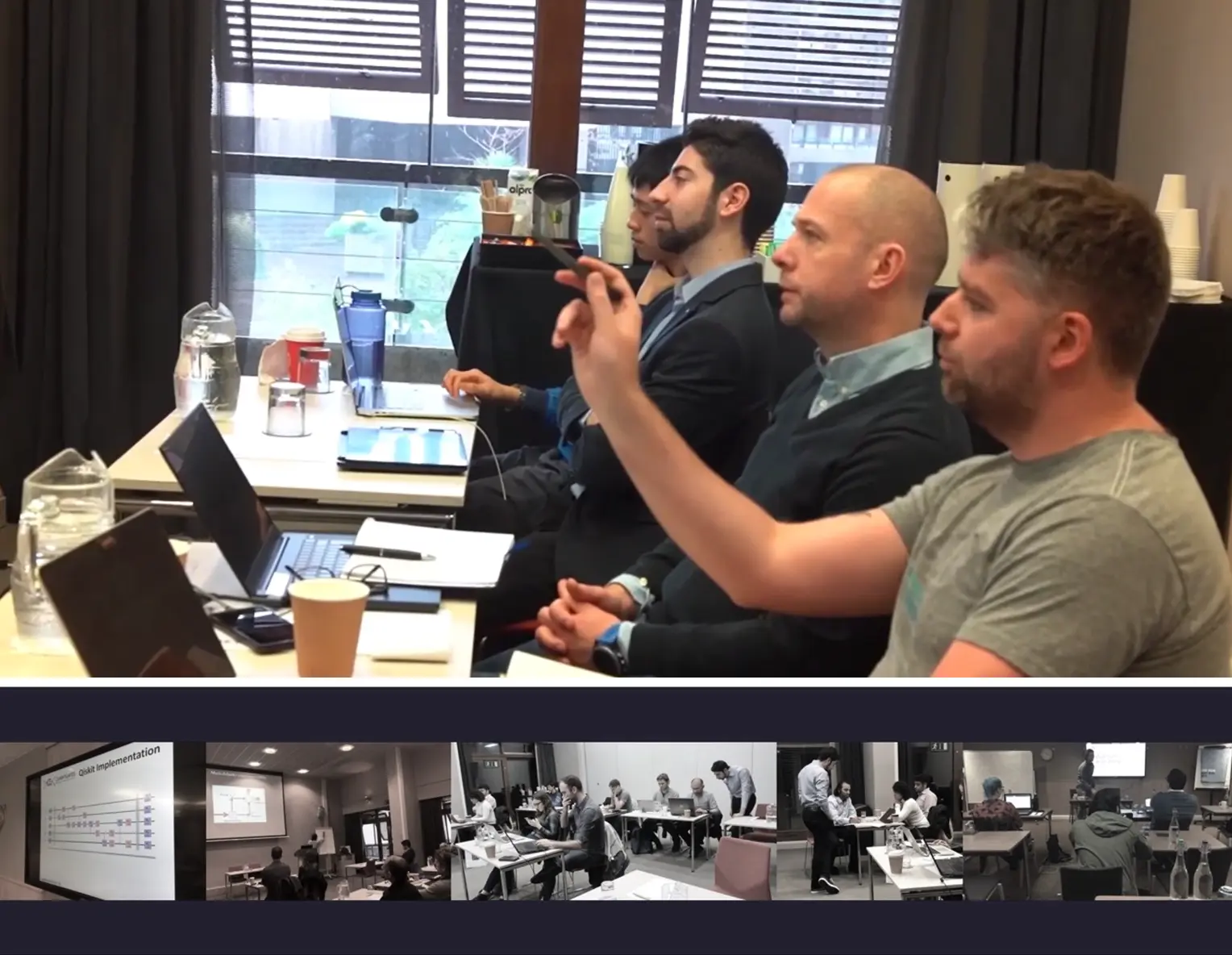
Shared this insight during the QuantGates workshop at the Barbican, London.
Begin your next stage of quantum learning.
Explore the latest research and developments in quantum computing through structured lessons, hands-on assignments, and practical implementation.